




The time required to complete a form on a traveler can vary significantly based on multiple factors. As a seasoned form on traveler supplier, I've witnessed firsthand the diverse circumstances that influence this timeline. In this blog, I'll delve into the key elements that determine how long it takes to finish a form on a traveler and offer insights to help you better understand the process.
Complexity of the Form Design
One of the most significant factors affecting the completion time is the complexity of the form design. Simple forms with basic shapes and standard dimensions generally take less time to fabricate. For instance, a straightforward rectangular form for a small - scale construction project can be completed relatively quickly. These forms often require less intricate cutting, welding, and assembly work.
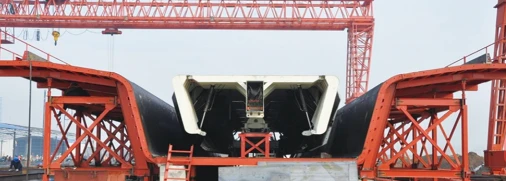

On the other hand, complex forms with irregular shapes, multiple curves, or unique features demand more time and effort. A form designed for a custom - shaped building structure, such as a curvilinear façade, will involve advanced manufacturing techniques. Precision cutting and bending are necessary to achieve the desired shape, and the assembly process becomes more challenging as well. The more complex the design, the longer it takes to ensure that every part of the form meets the required specifications.
Size of the Form
The size of the form also plays a crucial role in determining the completion time. Larger forms naturally require more materials and labor. For a large - scale Full Section Steel Formwork Concrete Lined Tunnel Trolley, for example, the sheer volume of steel needed for its construction is substantial. Cutting, welding, and transporting these large pieces of steel are time - consuming tasks.
Moreover, handling large forms during the assembly process is more difficult. Specialized equipment may be required to lift and position the components accurately. In contrast, smaller forms, like those used for precast elements in a smaller building project, can be fabricated and assembled more rapidly. The reduced size means less material handling and a simpler assembly process.
Material Availability
The availability of materials is another factor that can impact the completion time. If the required materials, such as high - quality steel, are readily available in the market, the production process can proceed smoothly. However, if there are shortages or delays in the supply of specific materials, it can cause significant setbacks.
For example, if a particular grade of steel is in high demand and there are limited stocks, the form production may have to wait until the material becomes available. This can add days or even weeks to the overall completion time. As a form on traveler supplier, we often work closely with our material suppliers to ensure a steady supply of materials and minimize any potential delays.
Manufacturing Capacity and Workforce
Our manufacturing capacity and the size of our workforce are also important considerations. A well - equipped manufacturing facility with modern machinery can produce forms more efficiently. Automated cutting and welding machines can significantly reduce the time required for these processes compared to manual methods.
The number and skill level of our workers also matter. A larger and more experienced workforce can handle multiple tasks simultaneously and complete the form more quickly. For instance, if we have a team of highly skilled welders, they can work on different parts of the form at the same time, speeding up the assembly process. However, if our manufacturing capacity is stretched thin due to a high volume of orders or if there is a shortage of skilled workers, it can lead to longer completion times.
Quality Control and Testing
Quality control and testing are essential steps in the form production process, and they also take time. Before a form is delivered to the customer, it must undergo rigorous inspections to ensure that it meets all the quality standards. This includes checking the dimensions, the strength of the welds, and the overall structural integrity of the form.
For a Precast Box Girder Formwork, for example, it may need to be tested to ensure that it can withstand the pressure and weight during the concrete casting process. Any issues identified during the quality control and testing phase need to be addressed, which can add extra time to the completion schedule.
Transportation and Delivery
Once the form is completed, transportation and delivery to the project site are also factors that can affect the overall time. If the project site is located nearby, the delivery process can be relatively quick. However, if the site is far away, especially in remote areas, it may take longer to transport the form.
Large forms, such as an Intelligent Trolley, may require special transportation arrangements. They may need to be disassembled for transportation and then reassembled at the site, which adds additional time to the process.
Typical Timeframes
Based on our experience as a form on traveler supplier, a simple form for a small - scale project can typically be completed within 1 - 2 weeks. This includes the time for material procurement, fabrication, and quality control. For medium - sized forms with moderate complexity, the completion time usually ranges from 2 - 4 weeks.
Large and complex forms, such as those used in major infrastructure projects, can take 4 - 8 weeks or even longer. These projects often involve more detailed design work, a larger quantity of materials, and more comprehensive quality control and testing procedures.
Conclusion
In conclusion, the time it takes to complete a form on a traveler is influenced by a variety of factors, including the complexity of the form design, its size, material availability, manufacturing capacity, quality control, and transportation. As a form on traveler supplier, we strive to optimize the production process to minimize the completion time while maintaining the highest quality standards.
If you are in need of high - quality forms for your construction project, we are here to help. Our team of experts can work closely with you to understand your specific requirements and provide you with a customized solution. We are committed to delivering forms on time and ensuring your project's success. Contact us today to start a discussion about your form on traveler needs and let's work together to bring your project to life.
References
- Construction Industry Institute. (20XX). Best Practices in Formwork Manufacturing.
- American Institute of Steel Construction. (20XX). Steel Formwork Design and Fabrication Guidelines.