



Curtain Wall
What is Curtain Wall
Curtain walls are primarily made of aluminum and glass, making them a lightweight alternative to many traditional building materials. Curtain walls are not designed to provide structural support to a building and can typically only support their own weight. Their design allows them to transfer the forces of external factors such as wind to the building's internal structure, which is stronger and stronger. Installing curtain walls on the exterior of a building can also provide an air- and water-tight seal to protect the interior structure.
Benefits of Curtain Wall
Aesthetic Appeal
Curtain walls are renowned for their aesthetic appeal. The extensive use of glass in curtain walls allows natural light to flood the interior spaces, creating an open and inviting atmosphere. This luminous effect not only enhances the visual appeal of the building but also contributes to the well-being of its occupants by reducing the need for artificial lighting during daylight hours.
Design Flexibility
One of the most significant advantages of curtain walls is the design flexibility they offer to architects. These walls can be tailored to match the unique vision of each project, allowing for creative expression in both form and function. The combination of various materials, colors, textures, and patterns enables architects to craft buildings that stand out and become iconic landmarks in urban landscapes.
Thermal and Energy Efficiency
With advancements in technology, modern curtain walls are designed to be energy-efficient. Double-glazed or even triple-glazed glass panels, combined with thermal breaks and insulating materials, provide effective insulation against temperature extremes. This feature not only reduces energy consumption for heating and cooling but also contributes to the overall sustainability of the building.
Natural Ventilation and Views
Curtain walls can be integrated with operable windows that allow for natural ventilation. This feature enhances indoor air quality and provides occupants with the ability to connect with the surrounding environment. Additionally, the extensive use of glass in curtain walls offers panoramic views of the outside, fostering a sense of openness and connection with the outdoors.
Quick Installation and Cost-Effective
Compared to traditional masonry walls, curtain walls can be installed more quickly, saving both time and labor costs. The modular nature of curtain wall systems allows for efficient assembly on-site. Moreover, the lightweight construction reduces the overall load on the building' s structural framework, potentially leading to cost savings during the construction phase.


Why Choose Us
Rich experience
Dedicated to strict quality control and attentive customer service, our experienced staff is always available to discuss your requirements and ensure complete customer satisfaction.
Customer Service
We firmly believe that we offer THE BEST customer support in the industry and it is our ongoing goal to continually improve on our services. As an independently owned and operated business, we are able to provide the most accommodating service possible.
Professional team
Our professional team collaborate and communicate effectively with one another, and are committed to delivering high-quality results. They are capable of handling complex challenges and projects that require their specialized expertise and experience.
One-stop solution
At our manufacturing facilities, we provide a complete package that includes everything required to get you started, including training, installation and support.
High quality products
We always put customer needs and expectations in the first place, refine on, continuous improvement, to seek every opportunity to do better, to provide customers with their expectations of quality products, to provide customers with the most satisfactory service at anytime.
Quality Control
All goods will undergo strict quality inspection before shipment. MCC always insists on providing high-quality products. We firmly believe that quality is the basis of everything.
Transom
It is a rail horizontally attached to the panel. Transoms are aluminium plates that are covered with some rubber and plastic materials. Transoms and Mullions form a grid structure.
Mullions
The vertical member contributing to complete the structural grid is called mullions. These mullions are screwed or joined to structure members with some of the anchors. Mullions fixed to the wall are covered with galvanized steel brackets to cover the irregularities visible on the wall. Mostly, Mullions are of timber, aluminium, and steel materials.
Vision Glass
Vision Glass is transparent glass installed in the space formed by a grid of mullions and transoms. Vision glass may be double glazed or triple glazed. Many times, spandrel glasses are used instead of vision.
Anchor
Anchors make it possible to join the mullions, transoms, and other such wall elements with structural members of the building.
Difference Between Structural Glazing and Curtain Wall
|
Structural Glazing |
Curtain Wall |
|
Structural glazing is a method of connecting glass to the structural frame components of a structure by using a high-strength, high-performance silicone sealant. |
A curtain wall is a non-structural outside covering of a structure intended to keep the elements out and the occupants in. |
|
Structural glass façade technology includes some sort of glass as the cladding material and embraces a design goal of high transparency and expressive structure. |
Curtain walls typically only have a floor-to-floor span, with an aluminium extrusion acting as the main structural component. |
|
Facades are employed in longer-span situations when using an aluminium extrusion as the primary spanning element is impractical or impracticable |
Curtain walls can be designed inside or outside of the building, and the panels can be hidden or visible from the outside. |
Vision Glass
It is the transparent glass that can be double or single glazed glass which has less e-reflective coatings.
Spandrel Glass
It is glass that hides the structural members of the building such as columns, floors plumbing, electrical lines, and many more. Thus, it is opaque and known as non-vision glass.
Stone Veneer
Sometimes the glass panels are replaced by stone veneers. The stone veneers are cut into specific shapes and sizes which is slipped and placed in the aluminium frame.
Aluminium
The panel frames in the curtain walls are made up of aluminium that provides the provision to fix the glass or stone or any other material in it.
Aluminium is not only used in curtain walls and panels but is also popular in windows. Do you want to know how? Just go through below article and relatable ideas.
Fibre-reinforced Plastics (FRP)
Basically, fibre-reinforced plastic is a combination of composite materials formed of polymer reinforced with fibres. Glass, carbon, aramid, or basalt are various fibres used in FRP.
Louvers or Vents
Louvers are horizontal or vertical thin strips mainly used to provide air circulation and ventilation. Moreover, the louvers are installed in a space where ventilation or air is required to operate by the means of mechanical gadgets.

Tall buildings are the major areas where the curtain wall system is commonly used. However, curtain walls are used at many other places too.
Now-a-days, curtain wall in bridges is widely acceptable for better results. The bridge is one of the structures that mostly consists of curtain walls glazed with stone veneer or any other material as per requirement. Between the main supports, a thin curtain wall is placed and designed such that it does not carry imposed load.
Besides this, Box Culvert is also a structure where a curtain wall is located below the box culvert. This type of wall in the culvert is also known as a thin wall. Also, to avoid damage in the walls, reinforcement is also added.
In the canals, curtain walls are placed at both upstream and downstream sides to maintain stability. Flowing water has energy and for that canal falls are used to dissipate the energy. Canal falls have curtain walls at the toe and heel portion.
Not only this, even in dams to protect foundation curtain walls are used which is known as Grout Curtain.
As curtain walls are non-structural, they can be made of lightweight material, which greatly minimises overall construction costs. Generally, curtain walls are designed to be fitted within extruded aluminium members as its strength and stability meets all the necessary demands to support large glass areas, encouraging natural light to flood into a property.
Curtain walls were often made using glass over a steel frame. However, in recent years they are usually created using an aluminium frame. These thinner aluminium frames are used to create dramatic, attractive facades that allow maximum levels of daylight into small or large multi-storey buildings. Some curtain wall systems also make use of other in-fills from materials such as stone veneer, metal panels or operable vents.
Regardless of which material used, curtain wall solutions are non-structural, which differs to many forms of traditional construction where all external walls are an integral aspect of a building' s primary structure.

Categories of the Curtain Walls
Spider Curtain Walls
They are widely accepted and allow for maximum daylighting, spider curtain walls use huge transparent glass surfaces which allow ample natural light to come in. Glass panes are attached to the supporting structure by unique fittings like spiders, rules, clamps, tension rods, and other supporting pieces. Commercial structures frequently employ this product.
Rubber Curtain Walls
They are mainly rubber strips that are used on the wall. Rubber strips are the most common type of wall decoration. For wall-style curtains, production operations are divided into pieces that can span a very long distance. They may be shaped and designed into practically any form or pattern. Special applications call for these bespoke strip hangings.
Fiberglass curtain wall
It's mostly seen on the outsides of numerous business buildings. They expand usable areas in every room since the excellent thermal performance keeps the space comfortable right against the FRP frames. Just like glass, they also have stable expansion and contraction rates.
Photovoltaic Curtain Wall
It can generate electricity with the help of solar energy. In fact, it is an energy-saving glass curtain wall. It has been developed with the assistance of new technology and so they are weather resistant.
Stainless Steel Curtain Wall
It is such a type of wall that is most prominent in many buildings. Steel is said to be a high-class material so they are quite genuine in such cases. These types of steel can give good strength to the entire wall.
Glass Curtain Wall
It is said to be aluminum-framed walls with metal panels. The frame can be attached to the whole building and so there is no need of carrying it. These types of frames are very light-weighted. After the conclusion of World War II the existence of glass walls was noticed. They need very less attention while cleaning. This is the main advantage of using glass walls. They remain fine for a long time. However, with the advancement of technologies, there have been some variations in the glass walls. Various categories and types of this type of wall have been introduced and they are much better and good than the existing ones. Some of the walls require very less time for installation. It can also be installed with the help of advanced machinery and tools. But during the early days, all these walls has to be installed manually and it required good involvement of manpower at the same time.
Timber curtain wall
It is frequently used in conjunction with hardwood interiors. These are a fantastic alternative to standard aluminium ones. In addition, engineered structural wood mullions may be utilized both internally and externally to provide long-lasting and low-maintenance benefits. This material is commonly used in high-end custom residential, boutique retail, and hospitality buildings.
Brick curtain wall
This type of wall provides an ideal look in most of the living room. This type of wall is presumed to be stronger in character.
Wood Curtain Wall Systems: This type of wall is skillfully created so that it can be matched with any type of design and shape. It is very warm and friendly in nature.
Fire curtain Wall
This type is typically used on the exterior of a building where energy efficiency is required. This fire-rated product has been meticulously developed and built to prevent the spread of flames, smoke, and radiant and conductive heat. They consist of fire-resistant glass and frames, as well as component pieces that have been developed and tested to function together.
Design of Curtain Walls to Control Condensation
Thermal fracture
The aluminum used in curtain wall frame construction has a fairly high thermal conductivity. Therefore, low thermal conductivity materials such as neoprene, PVC, polyurethane, and polyester-reinforced nylon are used to enhance the condensation performance of the curtain wall. This material isolates the inner aluminum material from the outer aluminum material, thereby destroying thermal conductivity from the inside to the outside and in the opposite direction. Thermal insulation in the form of protective gaskets is provided in pressure glazing systems. This protective gasket, which acts as a thermal circuit breaker, cannot remain waterproof for long periods of time, so appropriate methods (such as drain holes) are needed to drain water and steam that seep into the corners of the gasket.
Curtain wall insulation
The thermal performance of non-translucent curtain wall components depends not only on the thermal insulation but also on the vapor barrier. Condensation issues and energy losses cannot be addressed unless adequate insulation is placed around the perimeter of the curtain wall. An example of insulation is mineral wool insulation installed around the perimeter of a building. It not only has thermal insulation effect, but also has fire protection effect.
Finite element analysis
If condensation plays a significant role in certain structures, such as buildings with high internal humidity, a finite element analysis will need to be performed specifically for that project. Finite element analysis can estimate a product's energy efficiency and local temperature patterns. This information may be related to condensation, moisture damage, and structural integrity issues. There are software available for finite element analysis, such as Therm, which is capable of modeling two-dimensional heat transfer effects such as walls and doors, where thermal bridges are very important.
Regular cleaning
Regularly clean curtain wall surfaces, especially glass sections, to remove dust, dirt and other contaminants. Use professional cleaners and tools to ensure a thorough clean.
Check curtain wall seals and hardware
Check whether the glue seal is intact and firmly adhered without falling off or cracking. Also, check the hardware to make sure it is intact and not rusted or damaged.
Check glass quality
Check the glass regularly for cracks, looseness, or other problems. Replace damaged glass promptly when problems are discovered to prevent safety hazards.
Check the walls for leaks
Check curtain wall joints regularly for signs of leaks, especially during the rainy season. Repair any leaks promptly to prevent moisture and structural damage to your walls.
Regular maintenance inspections
Conduct regular maintenance inspections, including assessment of the overall stability and safety of the curtain wall structure. If abnormalities or potential problems are found, timely measures should be taken to repair them.
Prevent maintenance from being performed in adverse weather conditions
Avoid curtain wall maintenance and upkeep during rainy days or other severe weather conditions to ensure the safety of construction workers and prevent further damage to the curtain wall system.
Regular maintenance
Carry out regular curtain wall maintenance work, including inspection and repair of coatings, waterproofing layers, etc., to ensure the overall performance of the system.
Professional service
When faced with complex curtain wall issues, it’s best to seek professional curtain wall repair services to ensure the problem is properly diagnosed and resolved.
Our Factory
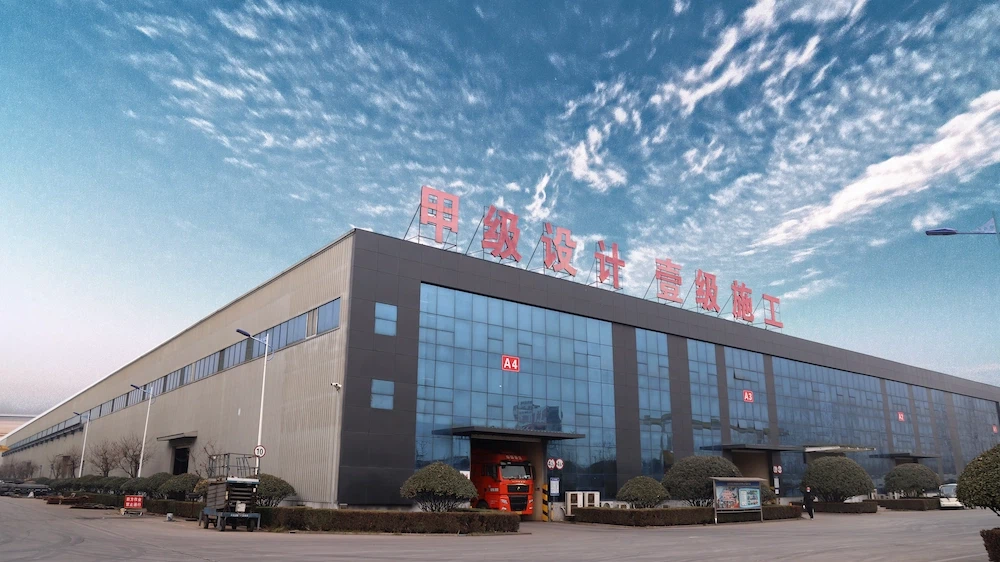
The company was founded in March 2013, the registered capital of 100 million yuan. The company has the national steel structure manufacturing special grade, metal roof (wall) surface design and construction special grade, steel structure, curtain wall design grade A, steel structure, curtain wall professional contracting grade 1 and other 17 qualifications; Shandong Province prefabricated building industry base. Can provide one-stop service from design, processing and manufacturing, construction and installation, engineering consulting management.


Certifications
The company has the national steel structure manufacturing special grade, metal roof (wall) surface design and construction special grade, steel structure, curtain wall design grade A, steel structure, curtain wall professional contracting grade 1 and other 17 qualifications
It is a member of China Steel Structure Association, a member of China Building Metal Structure Association, a vice president of Shandong Steel Structure Industry Association, and a governing unit of Shandong Civil Construction Society Assembly Building Committee. It has passed ISO9001, ISO1400, OHSAS18001 system certification, and has dozens of national patents.


FAQ
As one of the leading curtain wall manufacturers and suppliers in China, we warmly welcome you to buy curtain wall made in China here from our factory. All our products are with high quality and competitive price. Contact us for pricelist and quotation.
curtain wall caulking, curtain wall tints, curtain wall marketing