



Steel Bridge
What is Steel Bridge
Steel structure bridges refer to bridges whose main load-bearing structure uses structural steel. The beam and the leg or pier (pedestal) body form a rigid connection. Due to the consolidation of the pier and beam, the beam and pier are stressed.
Benefits of Steel Bridge
Strength and durability
Steel bridges are strong and durable, with a high strength-to-weight ratio. They can withstand heavy loads and harsh weather conditions.
Long span - Steel bridges can span long distances with minimal or without the need for intermediate supports. This makes them suitable for crossing large bodies of water, valleys, and other obstacles.
Speed of construction
Steel bridges can be prefabricated off-site and then assembled on-site. This enables reduction of construction time due to multiple tasks that can take place simultaneously with each other. It also enhances quality and safety due to controlled production environment and parameters.
Low maintenance
Steel bridges require minimal maintenance, as they are resistant to corrosion and deterioration when properly equipped with protection. This makes them cost-effective in the long run especially with the ability of steel to be relocated, replaced, re-used, and re-cycled.
Aesthetically pleasing
Monumental bridges are mostly steel bridges because they can be designed to be aesthetically pleasing, with unique shapes and designs that complement their surroundings.


Why Choose Us
Rich experience
Dedicated to strict quality control and attentive customer service, our experienced staff is always available to discuss your requirements and ensure complete customer satisfaction.
Customer Service
We firmly believe that we offer THE BEST customer support in the industry and it is our ongoing goal to continually improve on our services. As an independently owned and operated business, we are able to provide the most accommodating service possible.
Professional team
Our professional team collaborate and communicate effectively with one another, and are committed to delivering high-quality results. They are capable of handling complex challenges and projects that require their specialized expertise and experience.
One-stop solution
At our manufacturing facilities, we provide a complete package that includes everything required to get you started, including training, installation and support.
High quality products
We always put customer needs and expectations in the first place, refine on, continuous improvement, to seek every opportunity to do better, to provide customers with their expectations of quality products, to provide customers with the most satisfactory service at anytime.
Quality Control
All goods will undergo strict quality inspection before shipment. MCC always insists on providing high-quality products. We firmly believe that quality is the basis of everything.
How Many Types of Steel Bridges Are There

01
Steel Girder Bridge
Girder bridge is a bridge use the girder as the main load-bearing component. Plate and box are the two most common types of modern steel girder bridges. Like the picture below: the frist one is plate girder bridge, and the second one is box girder bridge.

02
Steel Arch Bridge
Rigid steel frame arch bridge refers to the arch bridge that looks like oblique leg rigid frame. It is composed of rigid frame arch piece, transverse beam and deck system. The rigid frame arch piece is a whole bearing structure composed of the arch rib and the building on the arch, which is connected by the transverse beam and the bridge deck system to form a whole common force.

03
Suspension bridge
A suspension bridge is a bridge in which cables (or steel chains) suspended by pylons and anchored on both sides (or both ends of the bridge) serve as the main bearing members of the superstructure.
Suspension Bridges are not only used for large sea and river crossings, but also for many footbridges across valleys.

04
Cable-stayed bridge
Cable-stayed bridge is a kind of bridge in which the main beam is directly pulled on the bridge tower with many cables. It is a structural system composed of a tower under pressure, a cable under tension and a beam under bending. Can reduce the height of the building, reduce the weight of the structure, save the material.
Loads and Load Combinations
Loads are the forces that act on a bridge. Live loads are vehicles and other moving loads, while dead loads are the bridge structure. Wind, seismic, and temperature loads are environmental loads. These combinations must be considered during the design process to ensure the bridge can safely handle them.
Structural Analysis
Structural analysis determines the behavior and performance of a bridge under various loads and load combinations. It considers different factors, including the structural system, material properties, geometric dimensions, and boundary conditions.
Redundancy
Redundancy involves providing additional structural members or elements to maintain the bridge' s integrity, even if one or more parts fail. Thus, a redundant design ensures the bridge' s safety, even in unforeseen events.
Limit State
Limit states are the conditions beyond which a structure can no longer perform its intended function. The limit-state design approach aims to prevent these conditions by ensuring the structure remains within safe limits under all loading conditions.
Design for Constructability
A well-designed bridge should consider constructability, reducing the complexity of the construction process and ensuring that it can be completed within budget and on time.
Design for Fatigue
Structural steel bridge designers must consider fatigue, especially for high-traffic bridges. Fatigue occurs when a material weakens and fails after repeated loading and unloading cycles.
Substructure Design
Substructure design refers to the bridge' s supporting components, such as piers, abutments, and foundations. It must maintain these components and maintain the bridge' s weight and load.
Splice Design
Splices are critical components of steel bridges, joining individual steel members together to create the overall bridge structure. It will ensure the connection is strong enough to resist various loads and combinations.
Bearing Design
Bearing design is essential in steel bridges, as it supports the bridge' s superstructure and transfers loads to the substructure. It must consider the loads the bridge will carry, the type of bridge, and its location.
- Elastomeric bearings: Commonly used in short and medium-span bridges
- Pot bearings: Preferred for long-span bridges
- Spherical bearings: Mostly used in curved bridges
The bearing design must also consider the bridge' s movement due to expansion and contraction caused by temperature changes.
Bridge Deck Design
A bridge deck is critical in structural steel bridge design because it carries traffic loads and provides a stable surface for vehicles. It must consider factors such as the type of deck material used to ensure safety and longevity.
Load Rating
The bridge' s strength and safety depend on its ability to carry loads and withstand forces, and a bridge' s load rating determines its maximum load-carrying capacity. Thus, it calculates the safe weight limit for vehicles and other loads crossing the bridge.
Corrosion Protection
Moisture, salt, and chemicals can corrode steel bridges over time. Therefore, steel bridges must be designed and built with corrosion protection in mind to ensure their long-term durability, safety, and sustainability.
Structural Components of Steel Bridges
They are steel sections or fabrications that runs continuous from pier to pier to span the gap and support the weight of the bridge. Steel beams are the main structural components of the bridge. They come in different shapes, including I-beams or H-beams, box girders, and trusses.
They provide vertical support for the bridge and anchorage to the foundation. Being in critical location and conditions, steel bridge columns especially water-borne, are normally reinforced concrete or combination of steel and reinforced concrete. Foundation construction including columns located in bodies of water requires the use of temporary or permanent steel casement to facilitate concrete casting. In some cases, steel columns are jacketed with concrete to provide protection to the steel against corrosion.
Steel girders can be plate girders or box girders and known as large beams. These steel components provide lateral support for the bridge. Girders has high load bearing capability and are designed to carry large amounts of dynamic and moving loads.
The deck of the bridge is the roadway or walkway surface that vehicles or pedestrians uses to pass. It is usually made of reinforced concrete or steel. Modern deck designs called as composite deck slabs involve galvanized sheet profiles as a reinforcement against positive moment and formwork for concrete placing at the same time. These galvanized sheet profiles are connected to beams or girders by fasteners or welding. The deck is supported by a series of girders that run parallel to the beams.
Different structural components are joined together to perform as a single steel bridge. Joints are designed to be rigid or flexible and are achieved by welding or bolting.
Information Acquisition Method of Steel Bridge Manufacturing Process Oriented to Intelligent Construction
To solve the information problem of steel structure bridge manufacturing process management, we proposed an event-driven steel structure bridge manufacturing information collection method based on Web, two-dimensional code, and database technologies, and established a steel structure collaborative construction decision-making information platform. Firstly, the code system of the steel structure bridge is constructed based on the construction resource code rules in the framework of BIM technology, and the two-dimensional code is produced by the unique code of the component of the code system. Secondly, QR code and steel structure bridge components/segments are combined to form an “intelligent entity”, and its production factors are defined. Finally, an event-driven steel structure bridge information model is constructed, and the information collection of spatial location, state, time, and other factors in the manufacturing process of the steel structure bridge is realized by combining the Web information management platform. The whole information collection process is marked by the component/segment code, and the component/segment two-dimensional code is used as the unified carrier to form a complete data chain of manufacturing, quality inspection, and transportation process. The application of the case shows that the application of the information model can solve the problem of isolated information resources in the prefabricated production and construction management of steel bridges, and improve the characteristics of the traditional information record with low timeliness and poor accuracy.

To protect steel bridges from corrosion, let's understand how corrosion weakens bridges!
Steel bridges often corrode when atmospheric environments such as salt, moisture and oxygen come into contact with the steel. Transportation agencies use steel safety coatings to prevent bridges from aging.
Corrosion is an electrochemical process that damages and destroys metal. Steel bridges contain hundreds of metal components, are subject to various influences, and are particularly susceptible to damage.
Energy on bridges is often installed in custom-made pipes, which are also susceptible to progressive corrosion.
Few bridge corrosion protection strategies are effective for them in the long term. We have successfully tested and implemented modern corrosion protection systems to comply with international regulations.
Just look at the developed countries in the world. Their infrastructure has some of the best steel protection systems available to prevent RCC steel from rusting.
Their infrastructure should communicate to us the importance of preventing corrosion and strengthening our nation's infrastructure.
What Should You Look for During Steel Bridge Maintenance
Visual inspection
Likewise, bridge maintenance must always begin with a visual inspection. Degradation or deterioration of steel is primarily due to corrosion, i.e. rust. You will definitely be able to see where the rust is by doing a visual inspection first. Based on this information, you can know which part of the bridge to focus on.
You should also be on the lookout for structural damage such as dents, deformations, chip damage, and other details that may affect the structural integrity of your bridge.
Remove and repaint
If a steel bridge needs to be repainted, the first thing to do is to remove the existing paint until only bare metal is left. Apply a coat of primer first, as it is the first layer of protection against the elements, so do not paint before applying the primer. Once dry, apply two coats of your favorite color. Be sure to apply paint to seal seams and intersections on metal surfaces to prevent moisture from getting between metal parts.
If the paint you are removing contains lead, be sure not to inhale or ingest it to avoid lead poisoning. Also use it diligently so you don't lead to lead poisoning of other organisms in the environment.
Clean exposed areas
Dust, animal droppings, and other forms of dirt can make your steel bridge look worn. When it comes to exposed areas (which is pretty much every area of the bridge), use a pressure washer to ensure a thorough clean.
When it comes to covers, another widely exposed component, replace uneven and worn covers if normal pressure washing and polishing aren't enough to maintain their integrity.
Reinforced steel
Some parts of a steel bridge can become weakened by corrosion and wear, but not all parts can be easily or immediately replaced. In these cases, strengthening these parts is your next best option. You can add additional steel to parts such as cross sections for reinforcement.
Be careful when adding more metal for reinforcement because the allowable stresses in the added material must comply with the load design stresses. Retrofitting is great, but it's not uncommon for some structures to weaken due to improper placement of added metal.
Steel cable maintenance
You can maintain steel cables by removing foreign matter from the cable support system and cleaning and lubricating the cable supports. Tighten or replace stirrups if necessary, and repair cable wraps if they become damaged.
Don't overlook steel cables just because their placement may cause repair and maintenance headaches. They are very important to ensure the safe use of steel bridges.
Why Steel Is the Perfect Material for Building Bridges
Elasticity
Many famous historical bridges were built with steel. In fact, some of these buildings are still standing today, more than 100 years since their original construction. A good example is the Union Bridge in Waterford, New York, which was originally a wooden bridge built in 1804. It burned down in 1909 and was rebuilt as a steel bridge, which still stands today. Other famous examples include the Golden Gate Bridge, Brooklyn Bridge, and Eads Bridge.
With careful maintenance, any steel bridge is sure to stand the test of time. They prove their resilience despite exposure to harsh environmental conditions and extreme events.
Speed up construction progress
Modern bridge construction techniques involve fabricating parts off-site using geometry-controlled equipment. Once completed, these structural steel components are ready for erection as soon as they arrive at the bridge site. Using channel beams and structural steel in bridge projects can speed up construction and even reduce on-site labor requirements and costs.
Future modifications and adaptability
If necessary, steel bridge components can be reinforced and modified. Some modifications you can make to a steel bridge include adding live loads, installing new live loads, widening roads, and other configurations. This is not possible with other materials such as stone bridges as they are more permanent structures.
long span building
Steel is capable of spanning bridges over 500 feet, often in the form of plate girders, tied arches, suspension bridges, cable-stayed bridges, and trusses. Just look at the Golden Gate Bridge. It is undoubtedly one of the most recognized engineering feats ever constructed using steel. Controlled manufacturing, lighter components and durability are some of the defining characteristics of steel that make it an ideal material for long-span structures.
Maintainability and repairability
Any bridge that experiences a lot of traffic will eventually wear out over time. Steel bridges can be effectively repaired and kept in serviceable condition without the need for complete replacement or reconstruction. Components can be strengthened by adding more material, or they can be removed and replaced without significantly affecting structural integrity. With proper maintenance and repairs, it is very possible to extend the life of a steel bridge.
Our Factory
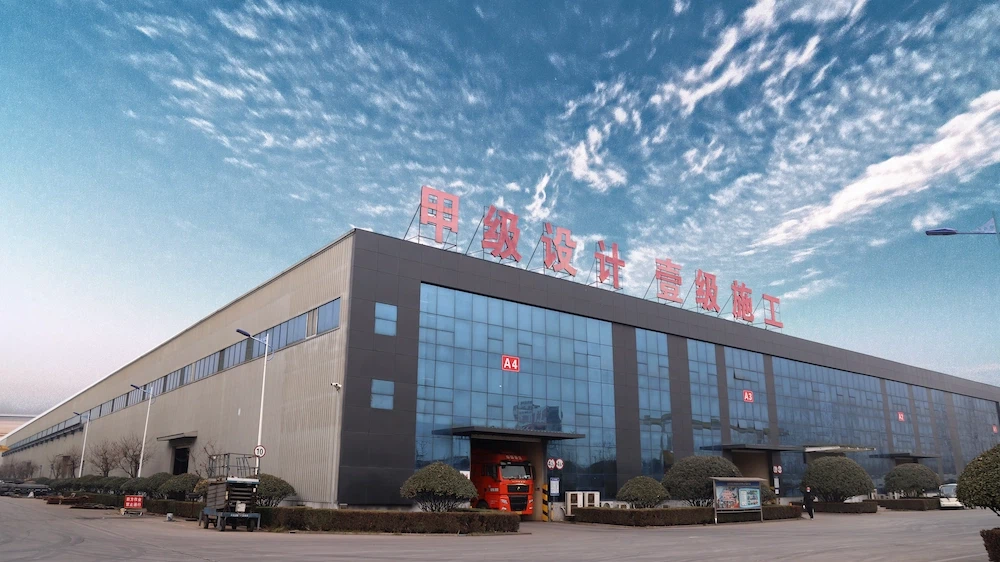
The company was founded in March 2013, the registered capital of 100 million yuan. The company has the national steel structure manufacturing special grade, metal roof (wall) surface design and construction special grade, steel structure, curtain wall design grade A, steel structure, curtain wall professional contracting grade 1 and other 17 qualifications; Shandong Province prefabricated building industry base. Can provide one-stop service from design, processing and manufacturing, construction and installation, engineering consulting management.


Certifications
The company has the national steel structure manufacturing special grade, metal roof (wall) surface design and construction special grade, steel structure, curtain wall design grade A, steel structure, curtain wall professional contracting grade 1 and other 17 qualifications
It is a member of China Steel Structure Association, a member of China Building Metal Structure Association, a vice president of Shandong Steel Structure Industry Association, and a governing unit of Shandong Civil Construction Society Assembly Building Committee. It has passed ISO9001, ISO1400, OHSAS18001 system certification, and has dozens of national patents.


FAQ
As one of the leading steel bridge manufacturers and suppliers in China, we warmly welcome you to buy steel bridge made in China here from our factory. All our products are with high quality and competitive price. Contact us for pricelist and quotation.
steel bridge delivery, steel bridge inspection, steel bridge project