




As a prefabricated box girder supplier, I've witnessed firsthand the increasing popularity of prefabricated box girders in the construction industry. Their use offers several advantages, including cost savings, improved quality, and faster construction times. But how do we evaluate the economic benefits of using prefabricated box girders? In this blog post, I'll share some insights based on my experience in the industry.
Understanding the Basics of Prefabricated Box Girders
Before diving into the economic evaluation, it's essential to understand what prefabricated box girders are. Prefabricated box girders are precast concrete structures that are manufactured off - site in a controlled environment. These girders are designed to be strong, lightweight, and durable, making them ideal for various bridge and infrastructure projects.
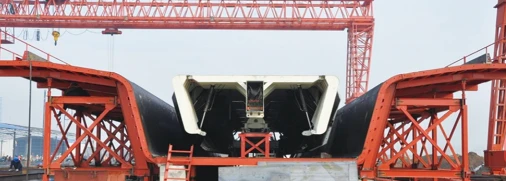
The manufacturing process of prefabricated box girders involves using specialized equipment such as Precast Box Girder Formwork. This formwork allows for precise shaping and consistent quality of the girders. Compared to traditional in - situ construction, prefabrication enables more efficient use of materials and labor, which can have a significant impact on the overall economics of a project.

Factors Affecting the Economic Benefit
1. Construction Time
One of the most significant economic benefits of using prefabricated box girders is the reduction in construction time. In traditional bridge construction, the on - site pouring of girders can take a long time, especially considering the curing time of concrete. However, with prefabricated box girders, the girders are already made at the factory, and they can be quickly transported to the site and installed.
For example, if a bridge project uses in - situ construction, it may take several weeks or even months to complete the girder construction on site. In contrast, for a project using prefabricated box girders, the installation can be completed in a matter of days. This reduction in construction time not only saves labor costs but also reduces the overall project duration, allowing for earlier revenue generation if the bridge is a toll - road bridge or an important transportation link that contributes to the regional economy.
2. Quality and Durability
Prefabricated box girders are produced in a controlled factory environment, which ensures high - quality production. Quality control measures can be more strictly implemented in a factory setting compared to on - site construction. This results in girders that are more durable and less prone to defects.
The long - term durability of prefabricated box girders can lead to significant cost savings. For instance, less frequent maintenance and repair work are required over the lifespan of the structure. This means reduced maintenance costs, lower disruption to traffic during maintenance operations, and a longer service life for the bridge. All these factors contribute to the overall economic benefit of using prefabricated box girders.
3. Material and Labor Efficiency
The manufacturing process of prefabricated box girders is more efficient in terms of material and labor use. In a factory, materials can be better managed, and waste can be minimized. For example, the use of Form Traveller and Intelligent Trolley in the production of prefabricated box girders allows for precise placement of materials, reducing over - use.
In terms of labor, factory workers are more specialized and can perform tasks more efficiently due to the repetitive nature of the work. This specialization leads to higher productivity and lower labor costs per unit of production compared to on - site construction, where workers may have to deal with various on - site challenges.
Quantitative Evaluation Methods
1. Life - Cycle Cost Analysis (LCCA)
Life - Cycle Cost Analysis is a comprehensive method for evaluating the economic benefit of using prefabricated box girders. It takes into account all costs associated with a project over its entire lifespan, including initial construction costs, maintenance costs, repair costs, and disposal costs.
The initial construction cost of a prefabricated box girder project may be different from that of a traditional in - situ construction project. While the transportation and installation costs of prefabricated box girders need to be considered, the savings in on - site labor and faster construction times may offset these additional costs.
During the maintenance phase, the lower maintenance requirements of prefabricated box girders result in lower costs. By estimating these costs over the expected service life of the bridge (usually several decades), we can calculate the total life - cycle cost. A project with a lower life - cycle cost is considered more economically beneficial.
2. Return on Investment (ROI)
Return on Investment is another important metric for evaluating the economic benefit. For a bridge project, the ROI can be calculated by comparing the revenue generated (such as toll revenues) with the total investment in the project.
The use of prefabricated box girders can lead to earlier revenue generation due to the shorter construction time. Additionally, the lower life - cycle costs mean that more of the revenue can be considered as profit. By calculating the ROI, project owners can determine whether using prefabricated box girders is a financially viable option.
Case Studies
Let's look at a real - world example to illustrate the economic benefits of using prefabricated box girders. A medium - sized bridge project in a busy urban area was initially planned to use in - situ construction. However, after a detailed economic evaluation, the project owner decided to switch to prefabricated box girders.
The initial construction cost of the prefabricated box girder option was slightly higher due to transportation and specialized installation equipment. However, the construction time was reduced from 12 months to 6 months. This early completion allowed the bridge to open to traffic earlier, resulting in additional toll revenue during the first year of operation.
Over the 50 - year service life of the bridge, the maintenance costs of the prefabricated box girders were estimated to be 30% lower than those of the in - situ girders. When conducting a life - cycle cost analysis, the total cost of the project using prefabricated box girders was found to be 15% lower than the in - situ option. The ROI for the prefabricated box girder project was also significantly higher, making it a more economically attractive choice.
Conclusion
Evaluating the economic benefit of using prefabricated box girders involves considering multiple factors such as construction time, quality, material and labor efficiency, and using quantitative methods like Life - Cycle Cost Analysis and Return on Investment. As a prefabricated box girder supplier, I can attest to the fact that in many cases, using prefabricated box girders can lead to significant cost savings and improved financial performance for construction projects.
If you're involved in a bridge or infrastructure project and are considering using prefabricated box girders, I encourage you to reach out to discuss your specific needs. We can work together to conduct a detailed economic evaluation and determine the best solution for your project.
References
- AASHTO. (2017). AASHTO LRFD Bridge Design Specifications. American Association of State Highway and Transportation Officials.
- EN 1992 - 1 - 1:2004. Eurocode 2: Design of concrete structures - Part 1 - 1: General rules and rules for buildings. European Committee for Standardization.
- FHWA. (2019). Prefabrication and Modular Construction: An Introduction for Highway Agencies. Federal Highway Administration.