

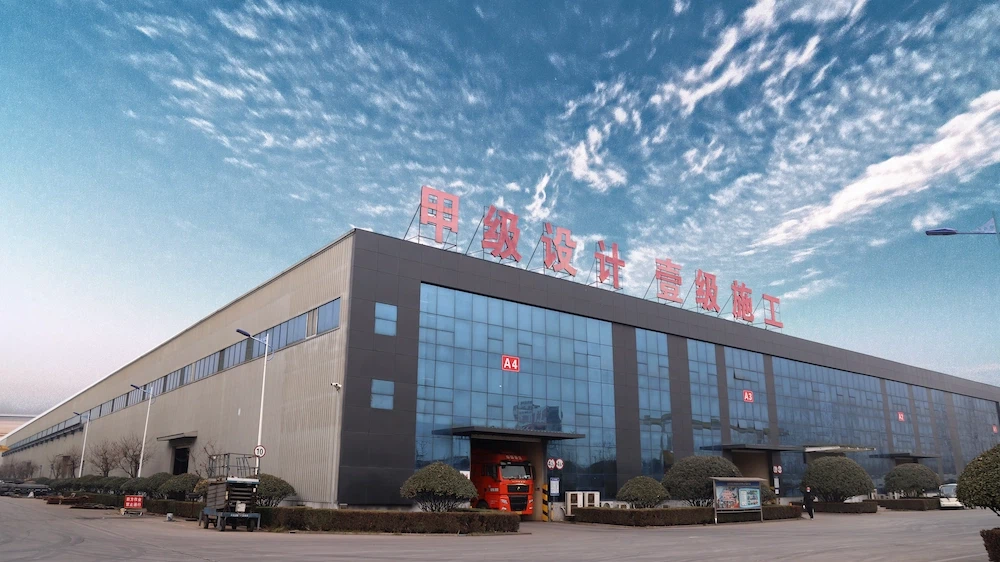


As a prefabricated box girder supplier, I often receive inquiries from clients about the fatigue performance of prefabricated box girders. Fatigue performance is a crucial aspect when it comes to the long - term reliability and safety of these girders, especially in bridge construction where they are subjected to repeated loading over their service life.
Understanding Fatigue in Prefabricated Box Girders
Fatigue is the process of progressive and localized structural damage that occurs when a material is subjected to cyclic loading. In the case of prefabricated box girders, these cyclic loads can come from various sources. Traffic loads are one of the most significant factors. Every time a vehicle passes over a bridge supported by box girders, it applies a dynamic load. The weight, speed, and frequency of the vehicles all contribute to the cyclic nature of the loading. Wind loads also play a role. Wind can cause vibrations in the girders, especially in areas with high - wind conditions. These vibrations lead to cyclic stress in the structure.
The fatigue performance of prefabricated box girders is mainly determined by the material properties, the design of the girder, and the manufacturing process. High - strength concrete and steel are commonly used in the production of box girders. The quality of these materials, including their tensile strength, ductility, and resistance to corrosion, directly affects the fatigue life of the girders. For example, steel with high toughness can better withstand the cyclic stress without cracking.
Factors Affecting Fatigue Performance
Material Quality
The quality of concrete and steel is of utmost importance. In the production of prefabricated box girders, we use high - grade concrete with a proper mix design. The water - cement ratio, aggregate quality, and the addition of admixtures all influence the strength and durability of the concrete. A well - designed concrete mix can enhance the resistance to cracking under cyclic loading.
For steel, we source from reliable suppliers and conduct strict quality control. The steel should have a uniform microstructure and meet the required mechanical properties. Any defects in the steel, such as inclusions or micro - cracks, can act as initiation points for fatigue cracks.
Design Considerations
The design of the prefabricated box girder also has a significant impact on its fatigue performance. The cross - sectional shape, the arrangement of reinforcement, and the connection details are all critical factors. A proper cross - sectional shape can distribute the load evenly and reduce the stress concentration. For example, a box - shaped cross - section provides better torsional and bending resistance compared to other shapes.
The reinforcement arrangement should be designed to resist the tensile stress caused by cyclic loading. Adequate spacing and quantity of reinforcement can prevent the propagation of cracks. Moreover, the connection details between different parts of the girder, such as the joints between segments, need to be carefully designed to ensure a smooth transfer of load and minimize stress concentration.


Manufacturing Process
The manufacturing process of prefabricated box girders is a key determinant of their fatigue performance. In our factory, we follow strict manufacturing procedures. The concrete pouring process is carefully controlled to ensure proper compaction and prevent the formation of voids. Voids in the concrete can weaken the structure and increase the risk of fatigue cracking.
The pre - stressing process is also crucial. Pre - stressing the girders can counteract the tensile stress caused by external loads, thereby reducing the stress range and improving the fatigue life. We use advanced pre - stressing techniques and equipment to ensure accurate pre - stressing forces.
Testing and Evaluation of Fatigue Performance
To ensure the fatigue performance of our prefabricated box girders, we conduct a series of tests. Static load tests are carried out to measure the strength and deformation characteristics of the girders under a single load application. These tests provide a baseline for understanding the structural behavior of the girders.
Cyclic load tests are more relevant for evaluating the fatigue performance. In these tests, the girders are subjected to a large number of load cycles at different stress levels. We monitor the development of cracks, the change in stiffness, and the overall deformation of the girders during the cyclic loading. The test results are used to determine the fatigue life of the girders and to verify the design assumptions.
In addition to physical tests, we also use numerical simulation methods. Finite element analysis (FEA) software can be used to model the behavior of the girders under cyclic loading. This allows us to predict the stress distribution, crack initiation, and propagation in the girders before the actual production.
Our Solutions and Products
As a prefabricated box girder supplier, we are committed to providing high - quality products with excellent fatigue performance. We use advanced manufacturing technologies and strict quality control measures. Our production process is optimized to ensure the consistency and reliability of the girders.
We also offer a range of related products that can enhance the performance of the prefabricated box girders. For example, our Intelligent Trolley is a state - of - the - art equipment that can be used in the construction process. It provides precise control and efficient operation, ensuring the accurate placement of the girders.
Our Full Section Steel Formwork Concrete Lined Tunnel Trolley is another innovative product. It can be used in the construction of tunnels where prefabricated box girders are often used. This trolley helps in the efficient installation of the girders and ensures the quality of the concrete lining.
The Invert Trestle is also an important product in our portfolio. It provides support during the construction process and helps in the proper alignment of the girders.
Conclusion
The fatigue performance of prefabricated box girders is a complex issue that is affected by multiple factors, including material quality, design, and manufacturing process. As a prefabricated box girder supplier, we take all these factors into account to ensure the high - quality and long - lasting performance of our products.
We conduct comprehensive testing and evaluation to verify the fatigue performance of our girders. By using advanced technologies and strict quality control, we are able to provide prefabricated box girders that can meet the demanding requirements of various bridge construction projects.
If you are interested in our prefabricated box girders or related products, we welcome you to contact us for a detailed discussion. We are ready to provide you with professional advice and high - quality products to meet your project needs.
References
- "Bridge Engineering Handbook" by Wei - Wu Yu.
- "Concrete Structures: Stresses and Deformations" by Zdeněk P. Bažant and L. Prem Anagnostopoulos.
- "Fatigue of Structures and Materials" by J. A. W. van Delft and J. W. Procter.